International Travel with T1D
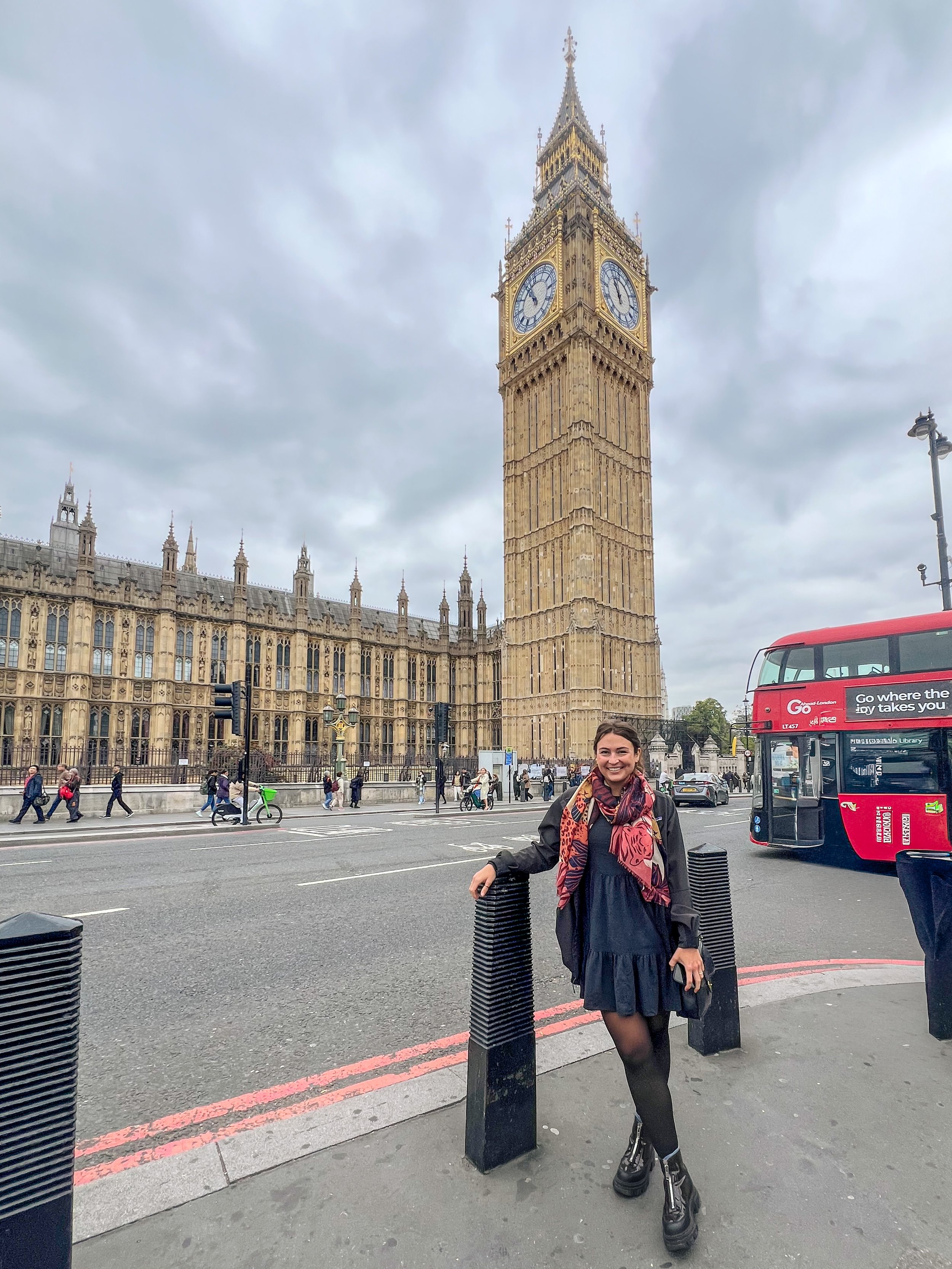
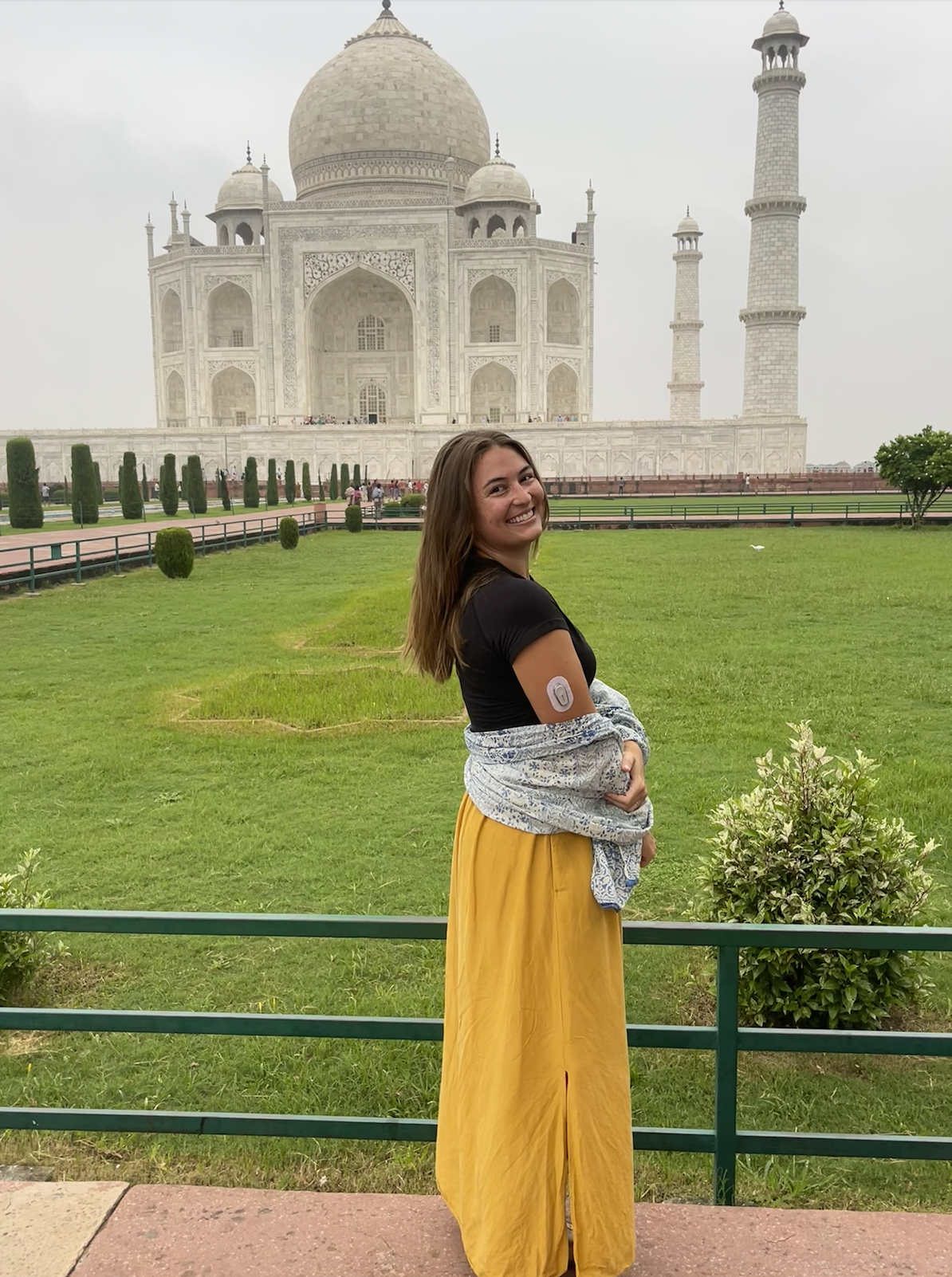
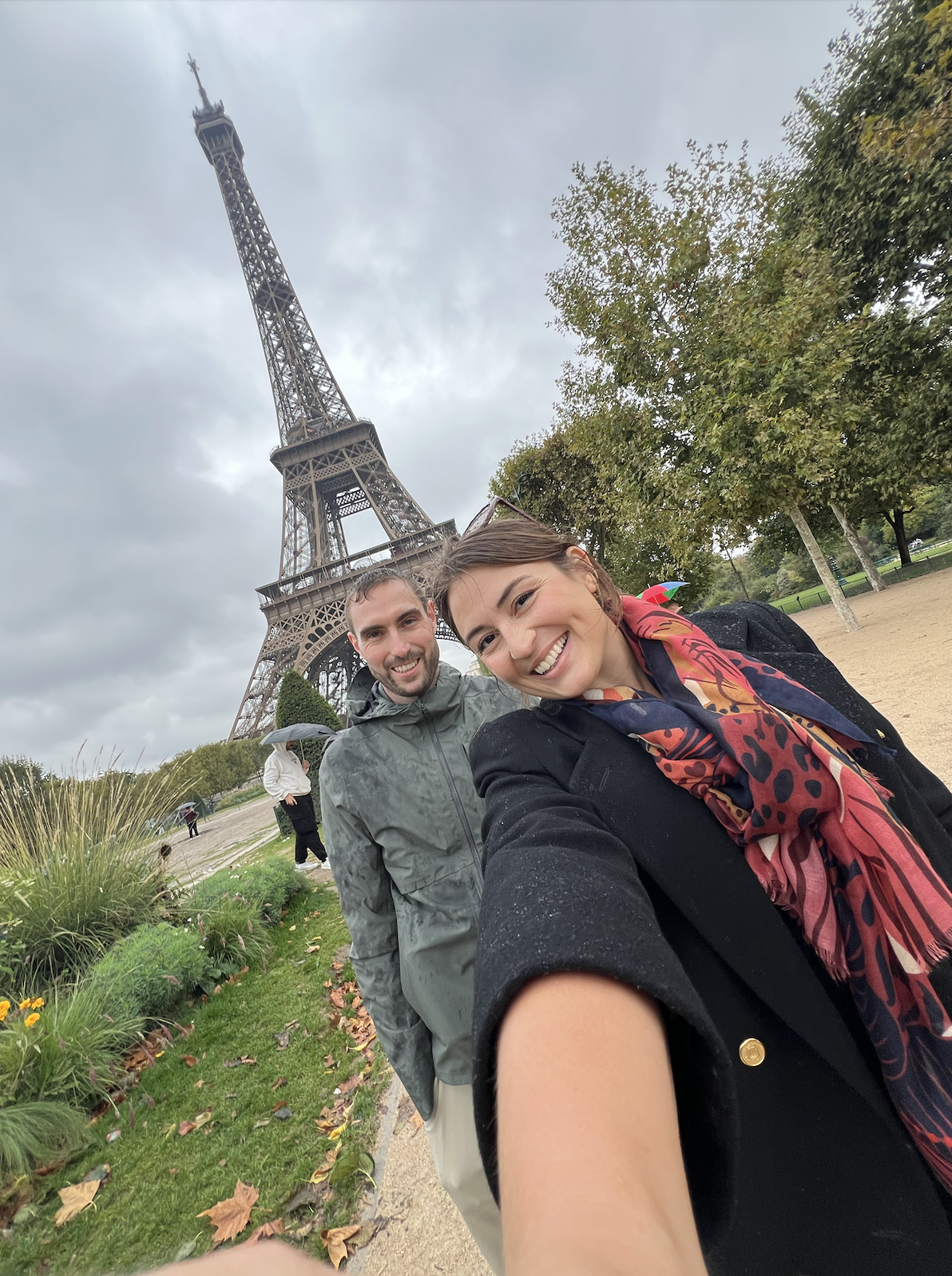
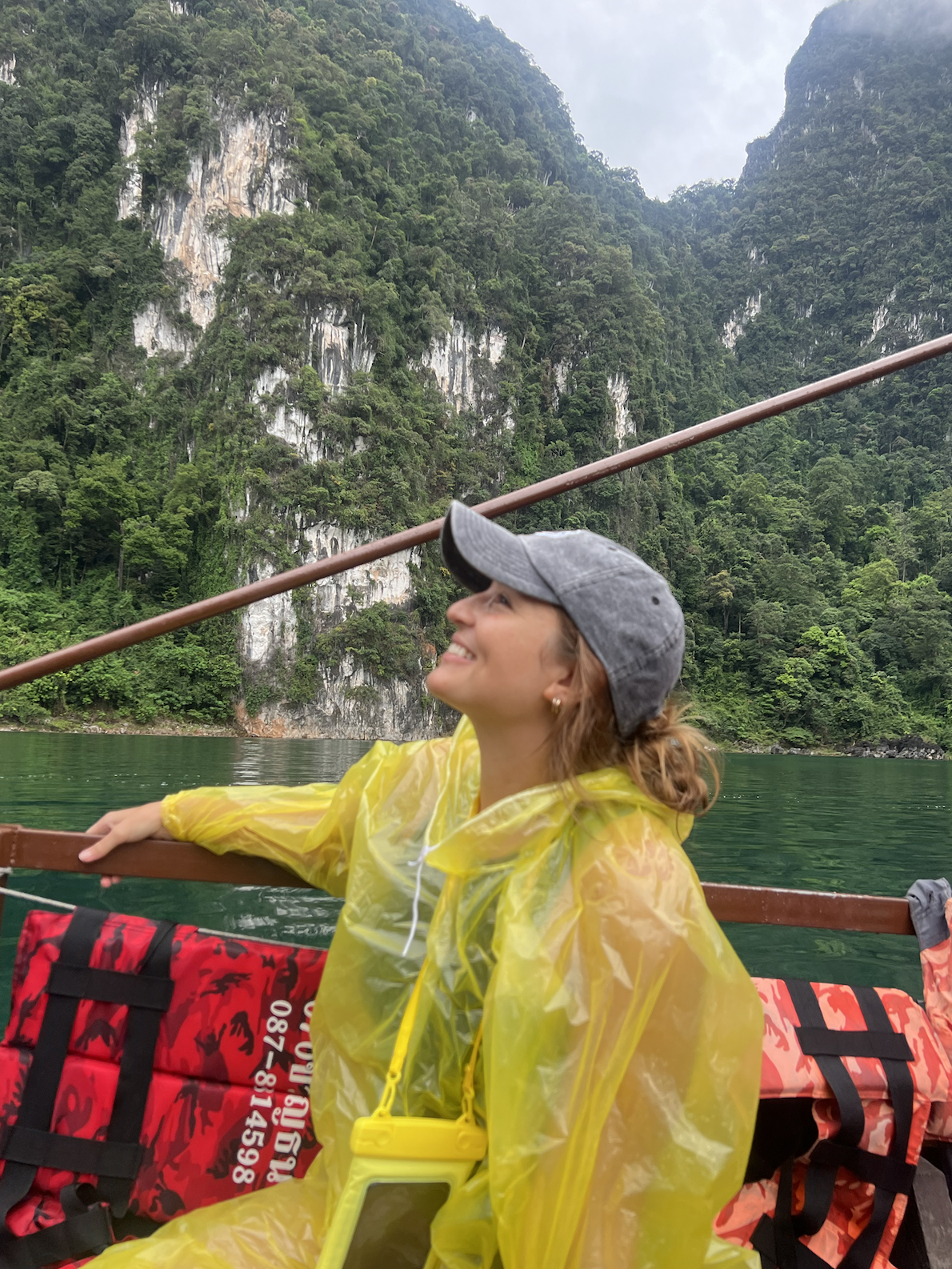
I love to travel!! And I’ve been lucky enough throughout my life to visit 37 countries and see so much of the world. It brings me so much joy to experience different places and cultures, meet new people, and of course, try the food.
BUT with type 1 diabetes, travel can come with a lot of extra baggage.
Flights. Time zones. Supplies. Changing routines. New foods. Different climates and altitudes. And so much walking!
Despite all of those variables, I’ve found that most of my trips go pretty smoothly. My blood sugars may be a little more volatile, especially during the first few days while I’m settling into a new routine, but over time I’ve gotten much better at knowing what to expect and how to adjust.
The biggest thing I’ve learned about navigating T1D while traveling is practice makes progress.
You can read every travel guide and diabetes blog in the world, dive deep into reddit, and watch every youtube video, but at some point, the only way to really learn how your body responds to travel is to experience it. You travel. You learn. You notice patterns. You make adjustments.
Preparation matters, but experience matters even more!! So while I hope you learn a lot from this blog, I hope that you go out and LIVE IT!
In this blog, I’m breaking down some of the most frequently asked questions I get about traveling with type 1 diabetes. And I’m currently putting together a separate one about Celiac! These answers are based on my own experiences and how I personally navigate travel, which may not always align with recommendations from device manufacturers or your healthcare team.
Take what serves you and leave what doesn’t. This is not medical advice.
1. How do you go through airport security?
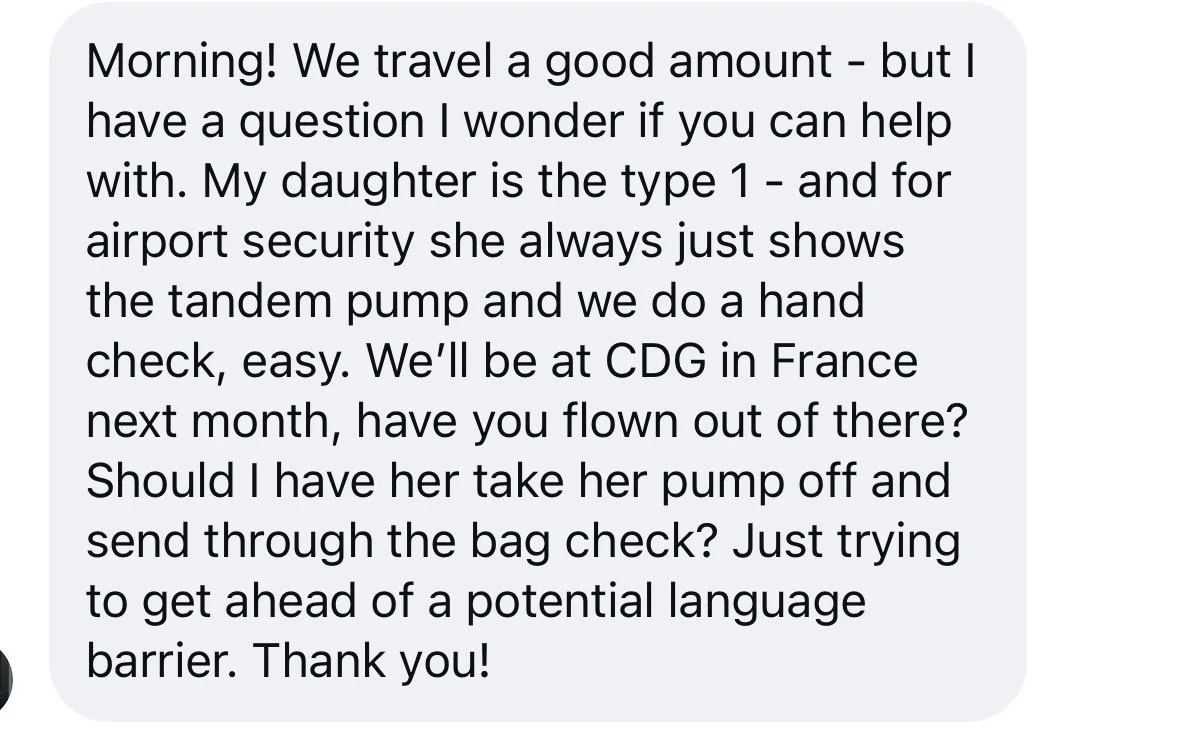
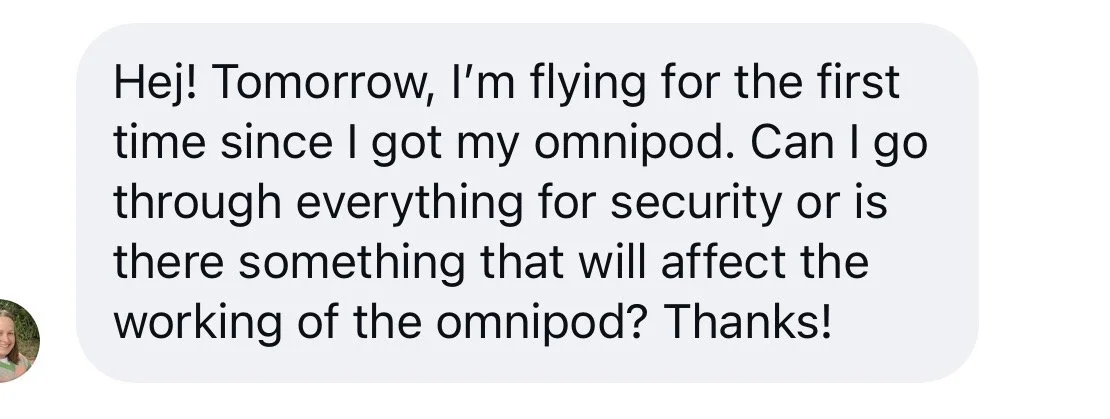
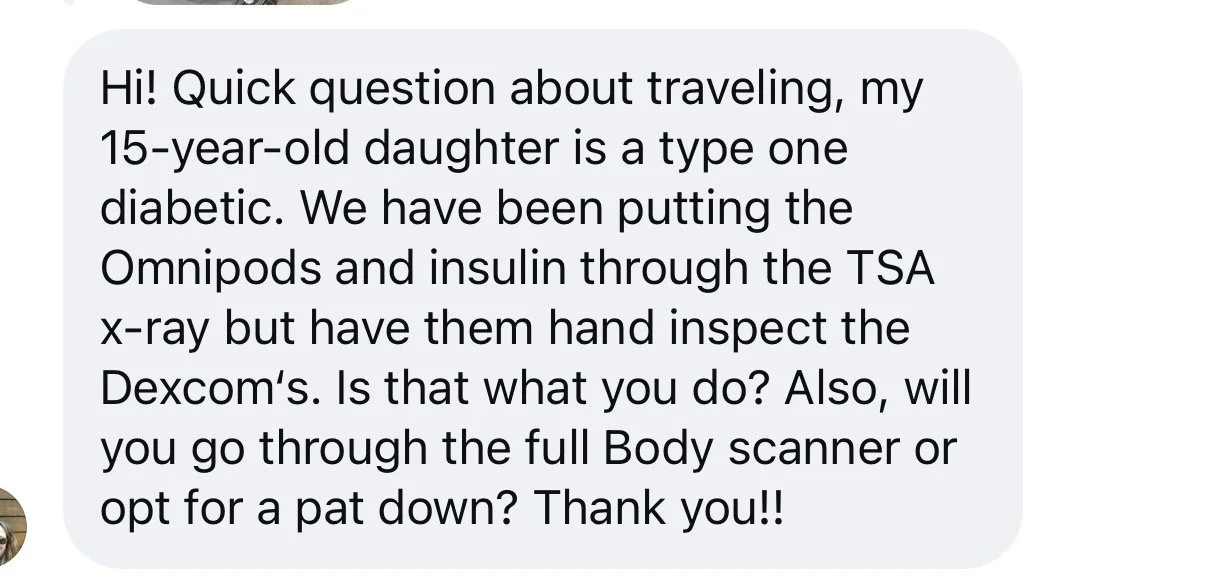
My experience has been pretty similar in the U.S. and internationally. I personally go through the full-body scanner/X-ray and put my diabetes supplies through the X-ray. I’ve never had an issue doing this. ( I wear Omnipod and Dexcom)
I know some people prefer not to put certain devices or supplies through airport scanners or X-rays, so if that makes you more comfortable, you can always request a hand check/pat down/ manual check instead.
When I go through the full-body scanner wearing my Omnipod, it usually alerts their system. I just say, “I have an insulin pump” and point to it. Security will usually have me touch or wipe my hand over the pump and then swab my hand. It only takes a minute, and then I’m on my way. TIP:Wear your pump/CGM somewhere that you can easily show security.
I also don’t typically tell security ahead of time that I have diabetes supplies with me. Occasionally, my bag gets pulled aside and someone asks what an Omnipod or Dexcom is. I simply show them the device on my body or explain what it’s used for. This actually happens less and less frequently now. Even when I traveled throughout Asia and went through 10+ airports, I only had this happen two or three times.
TIP: For situations like that, I do think it’s helpful to travel with a doctor’s note, copies of your prescriptions, and, if you’re traveling somewhere with a significant language barrier, a written explanation in the country’s native language describing what your diabetes supplies are and why you need them.

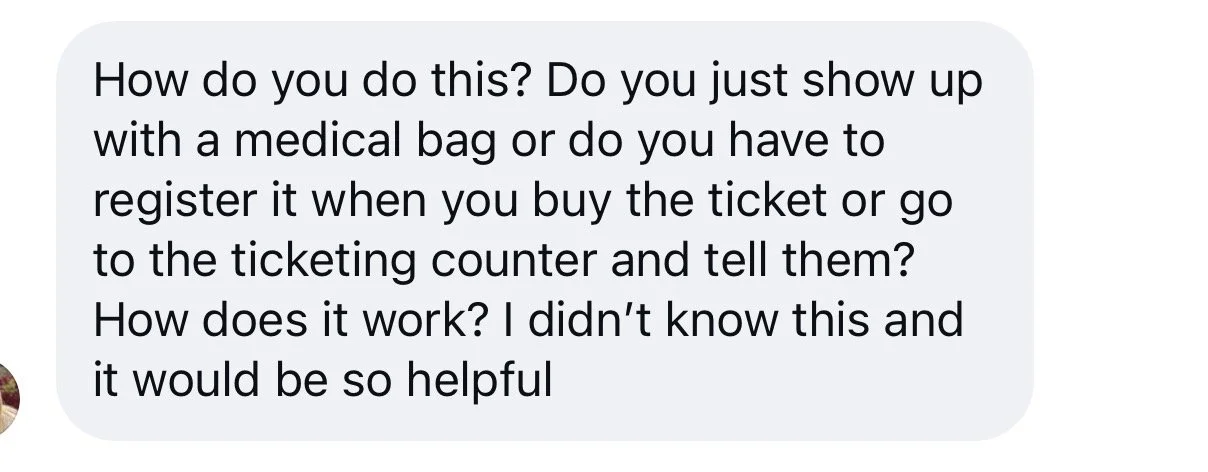
2. Do you bring a medical bag?
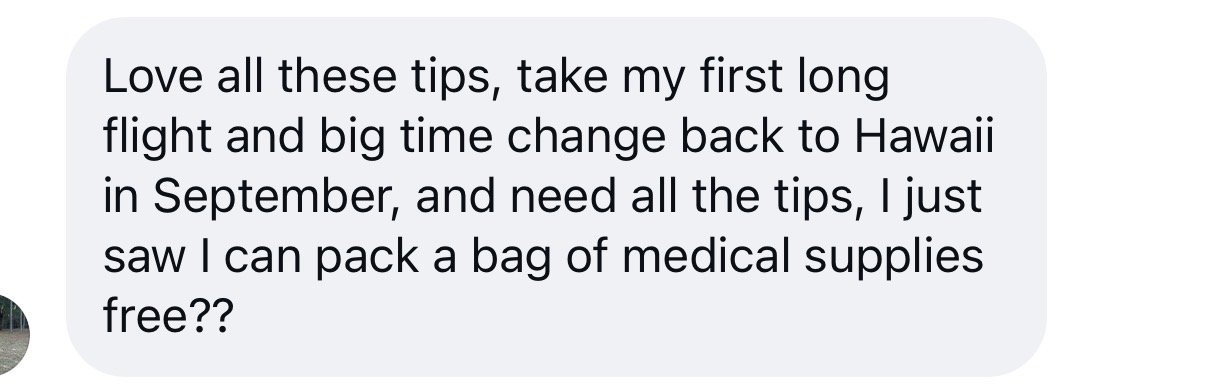
Sometimes! I honestly prefer traveling with just a carry-on and personal item, so if I can fit all of my diabetes supplies into those, I will.
The biggest thing for me is that I carry ALL of my diabetes supplies with me onto the plane. I never put T1D supplies in a checked bag.
That said, I have brought a separate medical bag on occasion when everything didn’t fit in my other bags. I use One2One bags!! (Use code MEG for $5 off!) Most airlines, even international, have no issues with this. I just make sure the bag fits within the airline’s size requirements and that it only contains medical/T1D supplies. And always double check, especially if it’s a smaller airline/plane that may have more restrictions or require notice in advance.
When I do bring one, I typically mention it at the check-in desk and then again at the gate so there’s no confusion when I’m boarding. I’ve only had the bag questioned once, on a Spirit flight and they searched it h to make sure it was only medical things.
3. What do you pack?
My T1D packing list is here!
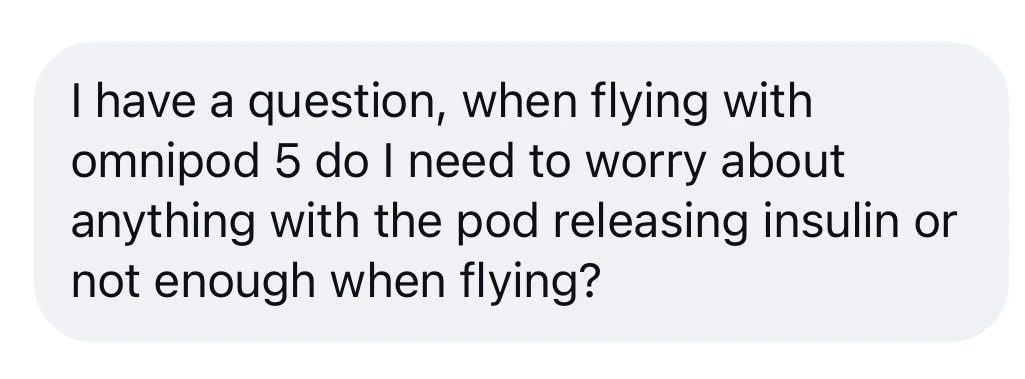
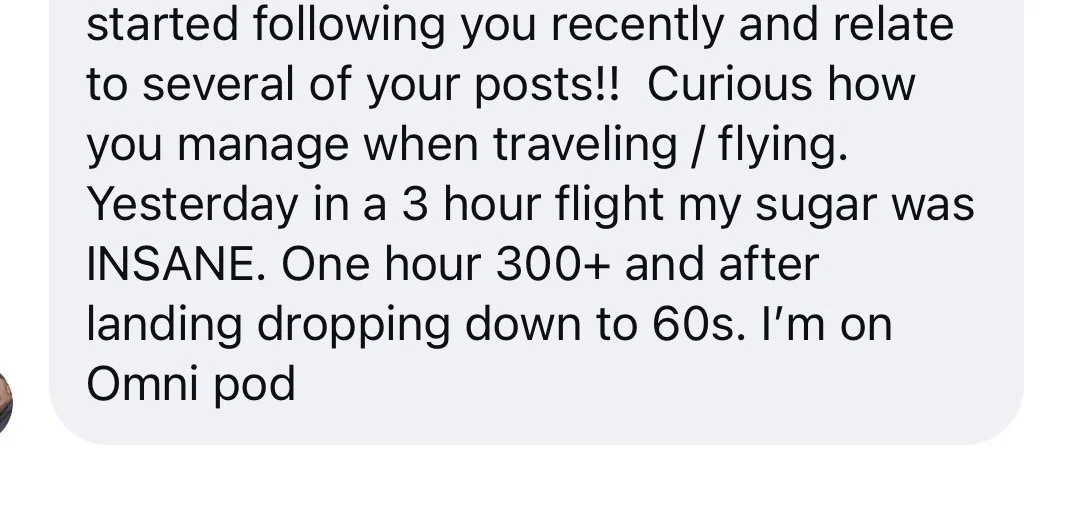
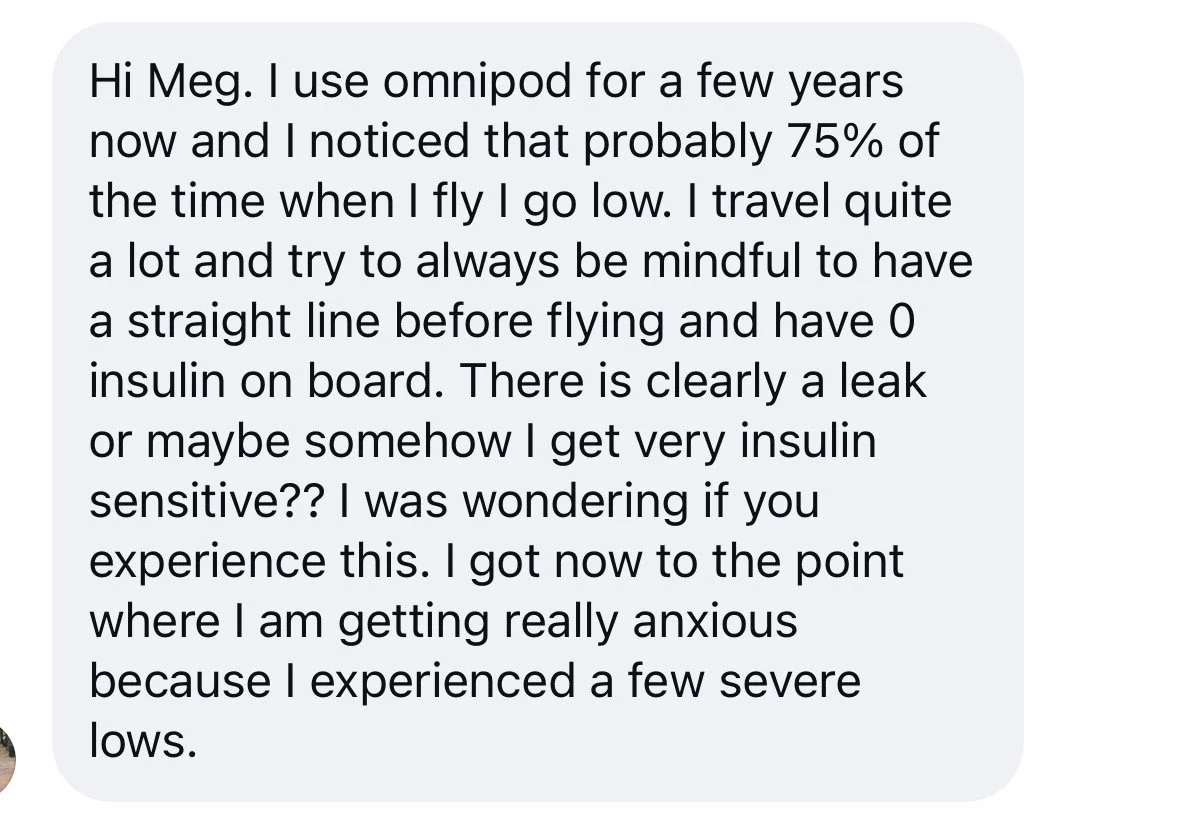
4. What do you do about Omnipod on flights? Have you ever had a low from it?
This is a big fear for a lot of my clients, and I hear you! It can feel pretty nerve-wracking to think about your pump potentially delivering extra insulin because of changes in cabin pressure.
Omnipod does note that rapid changes in atmospheric pressure, like during takeoff and landing, can affect insulin delivery. Tiny air bubbles inside the Pod can expand as pressure changes, potentially causing a small amount of unintended insulin delivery.
Has this happened to me? Maybe! I’ve had a handful of unexplained lows on flights that I’ve chalked up to the pressure change. Anytime it has happened, I’ve been able to treat it with one or two low treatments and no issues beyond that.
TIP: My biggest practical tip is to avoid air bubbles as much as possible when filling your Pod. I’m extra careful when drawing up and filling the cartridge to make sure I’m not introducing unnecessary air.
I also keep fast-acting carbs easily accessible throughout the flight (like at my feet, not in overhead bin!) and pay a little closer attention to my glucose around takeoff and landing. (My fav low snack is glow gummies!! they are made of dextrose so super fast to work. Use code MEG for 10% off!)
If you use a tubed pump, you may have some additional options because the pump can be disconnected. Recommendations vary by pump, so check the guidance for your specific device and talk with your healthcare team about what makes sense for you.
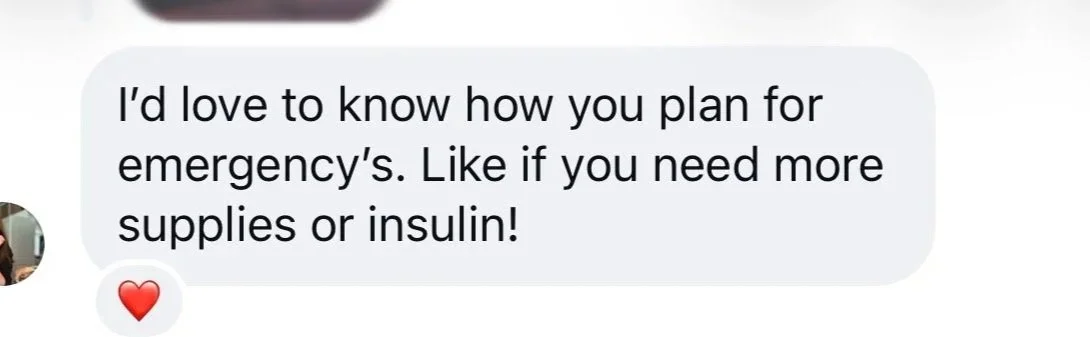
5. How do you plan for emergencies?
I try not to travel with the mindset that something will go wrong, but I do want to know what I would do if it did.
For me, that mostly means having backups. I bring more diabetes supplies than I expect to need, including extra Pods, Dexcoms, insulin, low treatments, and backup ways to give insulin or check my blood sugar if my pump or CGM fails.
I travel with copies of my prescriptions and a doctor’s note, and I make sure I know the generic names of the medications and insulin I use. If I’m going somewhere with a language barrier, I also like having a written explanation of type 1 diabetes, celiac disease, and my medical supplies translated into the local language.
For longer or international trips, I look up the basics of how I would access care if I needed it. I don’t necessarily research every hospital before I leave, but I want to know that I have a way to find appropriate medical care quickly, especially if I’m traveling somewhere more rural.
In urban areas, I’ve generally found it pretty easy to get what I need. One time, while traveling in Sri Lanka, I needed antibiotics for a UTI. I found a medical clinic that had an appointment available that day, got a check-up and the medication I needed, and the whole thing cost about $7 USD. Another time when I was living aborad in Ireland, I ran out of test strips. I walked into a pharamacy and they just gave them to me, no cost.
I also make sure the people I’m traveling with know the basics: where I keep my glucagon and low treatments, what a severe low could look like, and what to do if I couldn’t manage it myself. Most of my travel is with my husband, so I know I have someone with me who understands what to do if something goes wrong!
My goal isn’t to prepare for every possible scenario, that would be so overwhelming. I just want enough redundancy that one lost bag, failed Pod, bad Dexcom, or unexpected illness doesn’t immediately become an emergency. Having a plan makes me think about emergencies less once I’m actually traveling!!
6. What do you do about time zones?
Fortunately, Omnipod (and most pumps) are a step ahead on this one. When I cross into a new time zone, my Omnipod 5 will prompt me to update the time. It requires going into Manual Mode briefly, but the whole process takes about 30 seconds. I usually do it as soon as I see the notification.
Outside of the pump itself, my biggest tip is to get your body onto the new time zone as quickly as possible. A general rule of thumb I use is that it can take roughly a day per hour of time difference to feel completely adjusted, but from day one I try to eat, sleep, and move according to the local time.
You’ll probably be sleepy. Fight through it! Drink some delicious coffee, get outside, walk around, and find things to keep yourself awake until a reasonable local bedtime so you sleep well that first night! I don’t do anything intense on that first day, but I do try my best to stay awake!
I also give my blood sugars a LOT of grace for the first 24–48 hours. Between a red-eye flight, lack of sleep, different meal timing, sitting on a plane, suddenly walking everywhere, and a completely different routine, my blood sugars tend to be much more volatile that first day. I try not to predict too much or make huge adjustments based on a few weird hours. I watch what’s happening and respond as I go.
When I was on MDI, time changes required a little more planning because of my long-acting insulin. For example, I travel to Ireland fairly often because that’s where my husband is from and where his family lives. My flights were usually overnight, so I might take my Lantus at the airport around 7 pm as normal before leaving and then transition onto an Ireland-time schedule once I arrived.
Exactly how you adjust long-acting insulin across a big time-zone change depends on the insulin you use, your dosing schedule, and the direction and length of travel, so this is one I’d make a plan for with your healthcare provider ahead of time rather than copying my schedule.
The first travel day is rarely my prettiest blood sugar day. My goal is less about perfection and more about getting safely settled into the new routine.

6. All the walking! And all the heat!
Every trip is different, but most of mine involve lots of walking, lots of heat, or both!
For the most part, I use the same principles I use for exercise at home, just amplified.
The biggest thing I’m thinking about is how much insulin I have on board before I start moving.
If I know I’m going to eat lunch and then walk around a city for the next two hours, I will significantly cut back on my meal bolus. I’m talking sometimes giving only 25–50% of what I normally would! I also make sure I’m eating enough carbohydrates to support how active I’m going to be.
I may turn on Activity Mode ahead of time, especially if I know there’s going to be a long stretch of walking. Or, sometimes, I just plan strategically: We’re going to walk another hour, my blood sugar is starting to trend down… great time to stop for gelato!
Always, always have low snacks!! I keep fast-acting carbs somewhere I can get to them immediately.
I also try to remember that the effects of a big activity day don’t necessarily end when the walking does. If I’ve spent eight hours wandering around a city and have 25,000 steps by dinner, I may notice that I’m more insulin sensitive later that evening or overnight too. I keep an eye on my trends rather than assuming I’m done adjusting just because I’m back at the hotel.
Then there’s the heat.
Heat can make diabetes a little unpredictable, and different people respond differently. Personally, I pay attention to what my blood sugars are doing rather than assuming the heat will automatically make me go high or low.
Hydration is a big priority. Dehydration can make blood sugar management harder, and when you’re walking around all day in the summer, it’s easy to fall behind without realizing it. I carry water, drink consistently throughout the day, and replace fluids more intentionally when I’m sweating a lot.
I’m also careful about where my insulin and diabetes supplies are sitting. I don’t leave insulin baking in a hot car or sitting in direct sun, and for especially hot trips I’ll use an appropriate cooling case to help protect it. ( I love Breezy packs!!)
The same idea applies to altitude. Some people notice more lows, some notice more highs, and sometimes the first day is just weird. Instead of trying to predict exactly what my body should do, I look for patterns.
Am I running lower than normal every afternoon? Am I suddenly rising more after meals? Am I needing way more low snacks than usual?
Notice what’s happening, then make a small adjustment and see how your body responds. I try not to make huge changes based on one high or one low.
Travel has so many variables happening at once: more activity, different foods, less sleep, heat, altitude, alcohol, stress, and a completely different schedule. Oftentimes the best thing you can do is gather information for a day, respond to what’s actually happening, and adjust from there.
7. So much eating out!
Perhaps the most fun and the most overwhelming part of travel: eating out all the time!
Fortunately, there are ways to enjoy all the foods you want while traveling! And without feeling like your blood sugars are on a constant roller coaster.
In general, I try to anchor meals with protein and fiber when I can. That might mean choosing a meal with a solid protein source, adding vegetables, beans, fruit, or whole grains. It’s all about ADDING more to your plate for balance, not taking anything away! Protein and fiber can help slow digestion and make glucose responses feel a little more manageable.
That does not mean every meal needs to be perfectly balanced. You’re traveling! Eat the pasta. Get the tacos. Try the food that the place is known for. I just find that when I can add some protein or fiber around those foods, my blood sugars are usually easier to manage.
And use all that walking to your advantage. A walk after a meal can be incredibly helpful, especially after a higher-carb, higher-fat, or less balanced meal. Conveniently, sightseeing usually takes care of this for you.
I also use strategies like a split bolus pretty frequently when traveling. Restaurant meals can be hard to predict, and higher-fat meals may cause a delayed rise hours later. Sometimes I’ll give part of my insulin up front and then decide what to do with the rest based on my blood sugar, how much I ate, and what I’m doing afterward.
For example, maybe I only gave half of my usual bolus because I knew we were going to walk around after dinner. But then we get back to the hotel, I stop moving, and my blood sugar starts climbing. I may still need the rest of that insulin now.
The biggest thing is not expecting yourself to perfectly predict every restaurant meal. You probably won’t. I definitely don’t. Instead, I try to make my best estimate, watch what happens, and make adjustments from there.
Now I know these are quite general, but what you eat, your travel routine, and your body’s needs are so individual!
And if you want that more individualized support, I’m here to help!! I provide 1:1 nutrition and diabetes support (often covered through insurance!!) Fill out this form to see if you’re eligible for insurance covered or reimbursement based on your state and plan!
Happy travels!!
